
Bringing Sanctuary Into the Classroom: STEAM and Compassionate Care
Recently, Full Circle Farm Sanctuary had the opportunity to participate in a local Career Day at a nearby elementary school, bringing a small window of sanctuary life into the classroom.
More than 100 students and teachers joined the presentation, including a room full of curious first graders exploring a question many people don’t often consider: what kinds of knowledge and skills are needed to properly care for farmed animals in sanctuary?

Rather than focusing on a single career path, the conversation explored how science, technology, engineering, art, and math—STEAM—all play a role in compassionate care.
Students were introduced to the residents who live at the sanctuary and learned that providing lifelong care requires thoughtful observation, collaboration, and problem-solving.
Science helps caregivers understand nutrition, health, and behavior. Each resident has unique needs, and careful observation helps ensure those needs are met.
Technology supports the work behind the scenes—tracking medical records, documenting treatments, and sharing the residents’ stories with people around the world through digital media. It also plays an important role in how caregivers monitor health, support veterinary care, and provide the thoughtful medical attention some residents require.
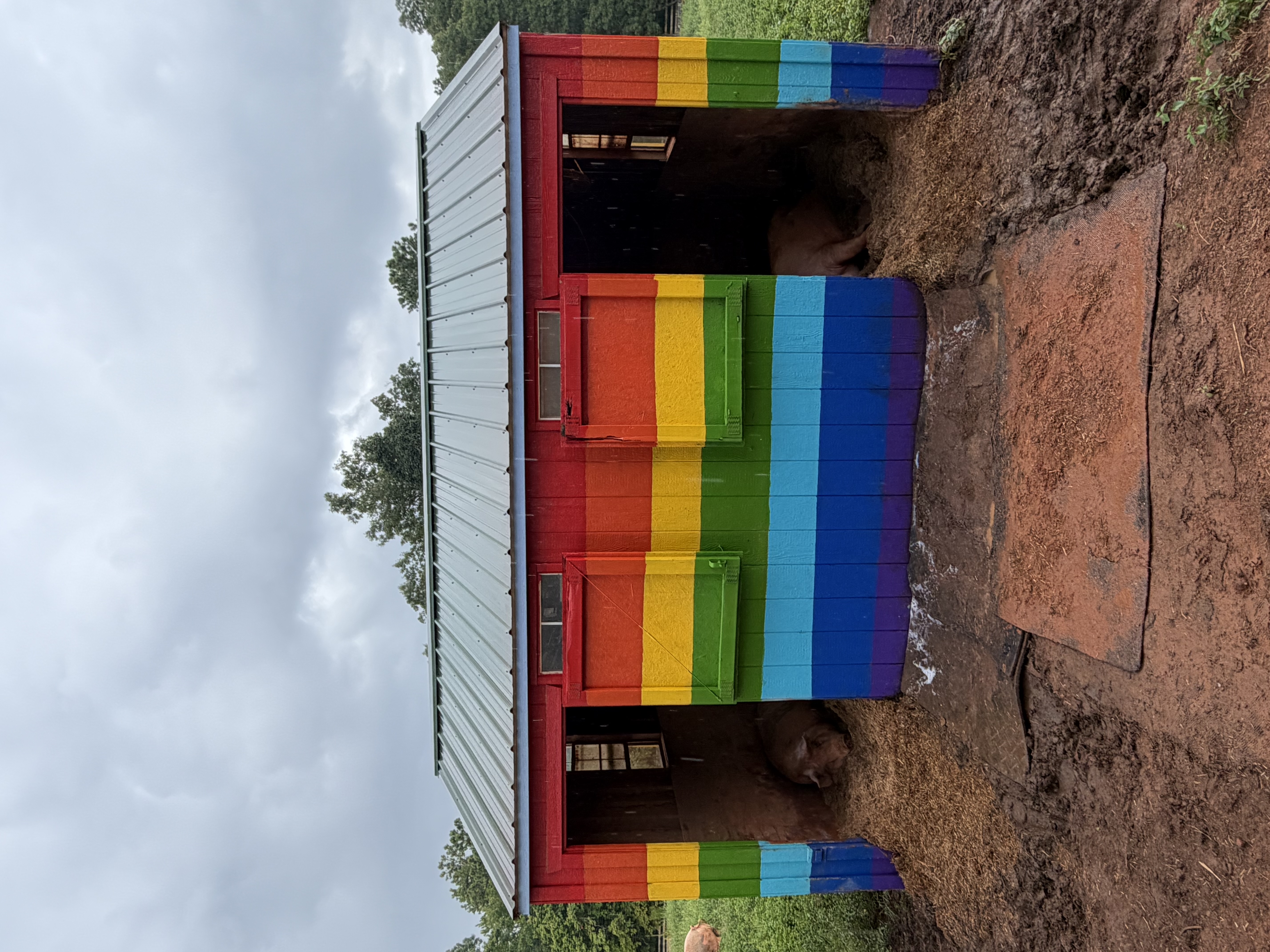
Engineering shapes the physical environment of sanctuary. From designing shelters to building fencing systems and creating safe spaces for natural behaviors, thoughtful design helps residents live comfortably and safely.
Art plays an important role in storytelling. Photography, writing, and visual media help people see farmed animals as individuals with personalities, friendships, and histories of their own.
And math quietly supports many daily decisions—from measuring feed to calculating medication doses that ensure residents receive the right care.

During the presentation, students also had the opportunity for a hands-on learning moment. Four different types of feed used at the sanctuary were passed around the room, allowing the children to see, touch, and examine what different animals eat. The students were then invited to guess which resident each feed belonged to. Laughter and thoughtful guesses filled the room as the students compared textures, shapes, and sizes—quickly discovering that the diets of cows, goats, chickens, and horses can look very different.

The activity sparked even more curiosity. Students eagerly raised their hands to ask questions and share stories about animals they had encountered in their own lives—animals they live with, animals they had visited, and thoughtful questions about the needs of sanctuary residents and how they spend their days. Their enthusiasm filled the room and reflected how naturally children approach animals with curiosity and empathy.
For many of the students—most just beginning their school journey—the conversation offered an early look at how compassion, curiosity, and learning can work together to improve the lives of animals.
Education has always been a cornerstone of the sanctuary’s mission. When people begin to understand farmed animals as individuals—and see the thoughtful work required to support their well-being—it opens the door to new ways of thinking about animals and the systems that shape their lives. This understanding is meaningful at any age, but it can be especially impactful for young audiences, who are still in their formative years.
Sanctuary does not end at the fence line. It grows wherever curiosity, empathy, and learning take root. At the end of the visit, many of the students shared that connection through thoughtful thank-you cards they created—small but meaningful reminders of the curiosity and compassion that filled the room that day.


