Beyond the Colors: Why We Reimagined Chicken Village
An intentional transformation rooted in compassion, enrichment, and the belief that every life deserves to be seen.
When we learned that Cornish Cross chickens rescued from Kaporos would soon be joining Full Circle Farm Sanctuary, we knew Chicken Village was ready for a transformation.
Through our experience caring for animals across many species, we've noticed that chickens don't always receive the same attention or consideration as other sanctuary residents.
We wanted to understand why. More importantly, we wanted to do something about it.
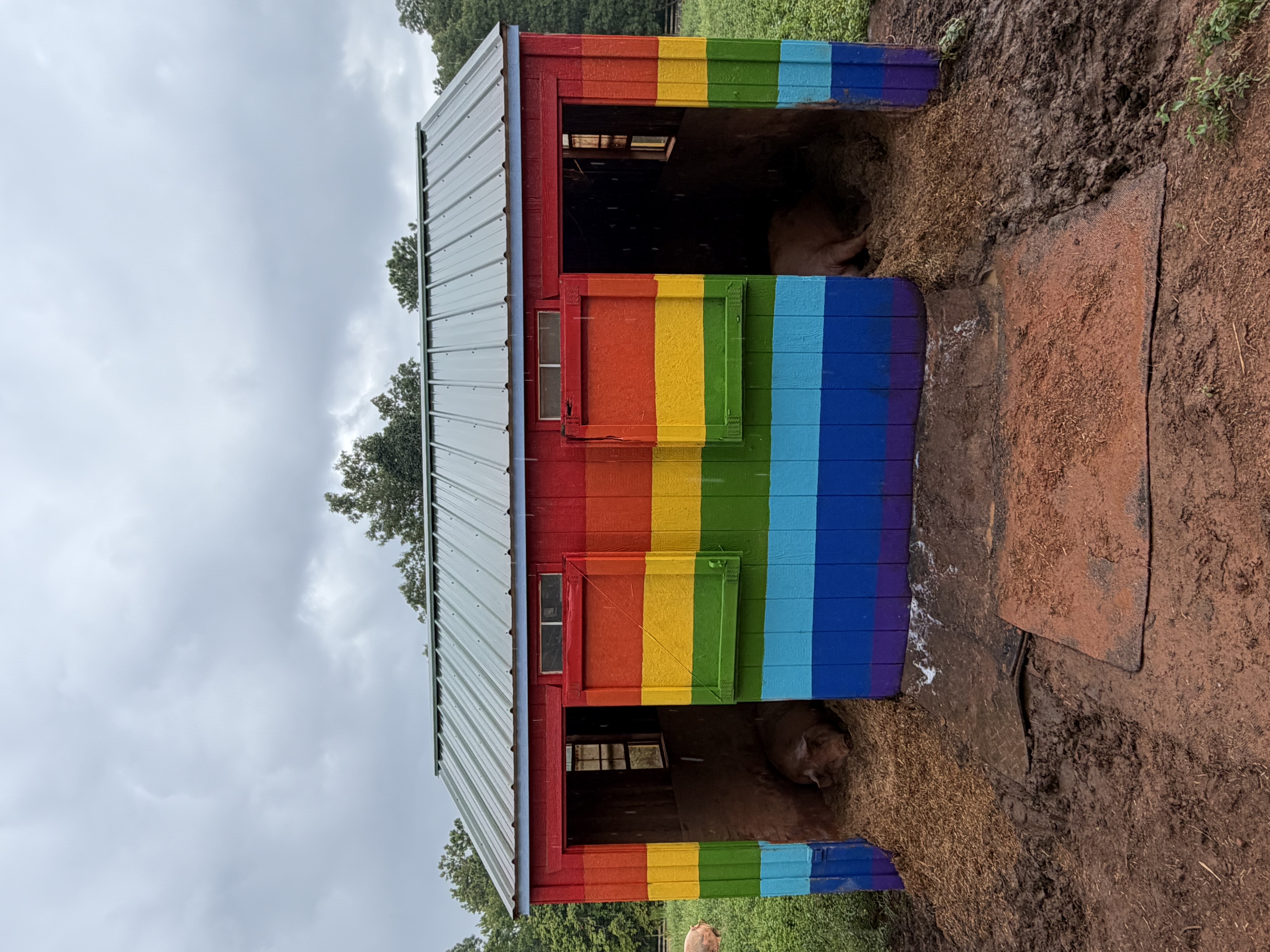
And so, Chicken Village got a glow-up.
Behind the colorful houses and refreshed yards is a deliberate investment in resident well-being, compassionate education, and challenging the way people perceive chickens.
We didn't simply want to make Chicken Village more beautiful. We wanted to make chickens more visible.
Why Are Chickens So Often Overlooked?
The disparity in attention extends well beyond what we observe during sanctuary visits.
We see it in social media engagement, readership of educational content, and even fundraising. Stories featuring chickens often generate less interest than those featuring pigs, goats, or cows, despite their lives and needs being equally important.
Why are some lives more readily recognized and valued than others?
There are likely several contributing factors, including familiarity and the ways society has taught us to perceive different animals.
For many people, chickens are introduced as food long before they're introduced as individuals. We encounter them in grocery stores, advertisements, and restaurant menus, while their personalities, relationships, and experiences remain largely unfamiliar.
Psychologist and author Melanie Joy explores this conditioning in her book Why We Love Dogs, Eat Pigs, and Wear Cows, through the concept of carnism — the belief system that normalizes eating certain animals. Closely related is speciesism, assigning different moral consideration to individuals based on their species.
Familiarity also matters. While many people have formed relationships with dogs or cats, fewer have spent meaningful time getting to know chickens.
Yet scientific research reveals remarkably complex social lives, communication, learning abilities, and emotional experiences.
But their worth isn't dependent on these abilities.
Chickens shouldn't have to demonstrate intelligence, entertain visitors, or seek human affection to deserve compassion. Their lives already have value.

Behind the Billions Are Individuals
According to data from the United Nations Food and Agriculture Organization, presented by Our World in Data, approximately 78.5 billion chickens were slaughtered worldwide for meat in 2024 alone.
It's a number almost impossible to comprehend.
At FCFS, we have the privilege of getting to know chickens beyond the statistics. We see their curiosity, their relationships, their preferences, and their distinct personalities.
The chickens living at the sanctuary are no more deserving of compassion than the billions who never experience sanctuary life.
The difference is not their worth. It's the circumstances of their lives.
That understanding helped shape our vision for Chicken Village. We wanted to create a focal point of the sanctuary that captures attention, inspires curiosity, and creates opportunities for meaningful connection, whether experienced in person or through the stories and images we share.
A place where chickens aren't simply part of the scenery.
They're the reason to pause, look closer, and discover more.
A World Through Their Eyes
The residents who call Chicken Village home were at the center of every decision.
Chickens have extraordinary visual abilities. While humans have three types of color-sensitive cone cells, chickens have four, allowing them to distinguish colors differently and perceive some ultraviolet wavelengths invisible to us.
While we can't know precisely how the flock experiences the colors we've introduced, we wanted to create an engaging environment that offered more than visual interest.
Alongside the colorful houses, we added new enrichment throughout the yards, including picnic tables, umbrellas, and cottages, providing additional opportunities for exploration, shelter, and rest.

Watching the flock discover the changes was extraordinary. They approached the freshly transformed houses and investigated their surroundings with the curiosity we've come to know so well.
Those moments reinforced a principle that guides our approach to sanctuary care:
The value of an improvement isn't measured solely by how beautiful it looks to humans, but by what it offers the residents who live there.
A Labor of Love
The vision for Chicken Village was ambitious. Bringing it to life required far more than a few cans of paint and a free afternoon.
What began with a volunteer workday continued through five additional overnight work sessions, in heat, rain, and cold. There were hours of intricate taping, careful painting, ladders to climb, and countless details requiring patience and precision.
The process itself was anything but tidy! Paint found its way onto clothing, shoes, hands, faces, and even hair. With every section painted and every strip of painter's tape removed, we seemed to become a little more colorful ourselves.
It was physically demanding, time-consuming, messy, and, at moments, overwhelming.
But the purpose behind the work never changed.
Love isn't always expressed through grand gestures. Sometimes it looks like showing up, putting in the hours, and refusing to lose sight of why the work matters.
And when the flock began exploring their transformed village, every exhausting hour felt worthwhile.
New Beginnings, One Colorful Village
The arrival of Journey, Cypress, Atlas, Promise, Aspen, Lavender, Hawthorne, Bloom, and Blossom gave this project even greater meaning.
And now, one of the most rewarding developments has been watching the younger Cornish Cross chickens share their world with three of the older girls: Lennox, Libby, and Rockelle.
During the day, the connecting gates between their adjoining aviaries are opened, giving both groups access to both spaces and the freedom to intermingle, explore, and spend time together.
Typically raised in same-age groups and slaughtered at just six to eight weeks of age, fast-growing chickens in conventional meat production rarely have the opportunity to learn from older generations.
But here, the babies have Lennox, Libby, and Rockelle.
With years of sanctuary experience, these older ladies are helping the younger chickens navigate their surroundings, develop relationships, and discover the richness of life as free chickens.
Enrichment isn't limited to the physical environment. Social relationships, opportunities to learn from one another, and the freedom to make choices are meaningful parts of sanctuary life, too.
The younger chickens aren't simply growing older. They're discovering the possibilities of a life they were never intended to experience.
And while the arrival of the Kaporos survivors inspired the transformation, this investment was equally important for the longtime residents who already call Chicken Village home.
More Than a Beautiful Place
Whether experiencing Chicken Village in person or through the stories, photographs, and videos we share, we hope people pause a little longer, discover the richness of chickens' social and emotional lives, and gain a new perspective on these remarkable individuals.
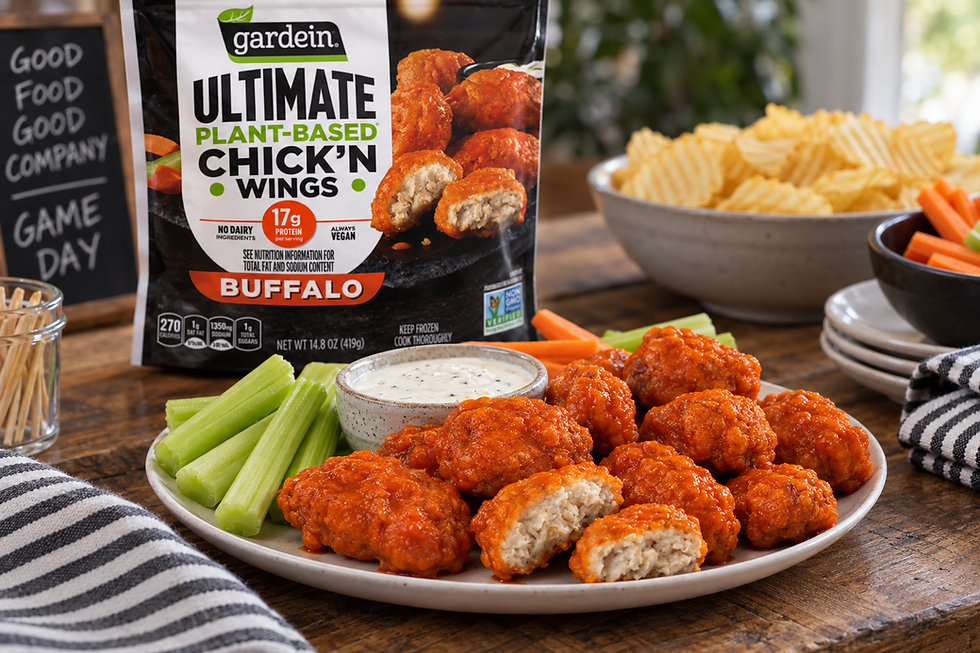
Through our Vegan Resources and Game Day Guide, we offer opportunities to learn more about Cornish Cross chickens, better understand their experiences within the food industry, and discover just how enjoyable and accessible compassionate food choices can be.
The beauty of compassion is that it can extend far beyond the sanctuary gates, finding its way into the choices we make every day.
A Village Built on Hope

For the newest residents, Chicken Village represents a new chapter.
For the longtime flock members, it's an investment in the place they already call home.
Chicken Village is a happy place. A place of hope. A place of reflection. And a place of education.
We hope the flock enjoys this transformation for years to come, and that the joy of Chicken Village inspires a deeper appreciation for chickens everywhere.
Because the most beautiful thing about Chicken Village isn't its transformation.
It's the individuals who call it home.
Compassion in Action
Explore compassionate choices: Visit our Vegan Resources and Game Day Guide pages to discover delicious alternatives that leave chickens off the plate.
Send a housewarming gift: Help us continue providing enrichment and care for Chicken Village residents through the FCFS wishlist.
Meet the Residents: Get to know the individuals who make Full Circle Farm Sanctuary their home.