Remembering Jupiter
On Monday, we gathered around Jupiter to say goodbye.
Many of you have followed Jupiter's story for years, and especially closely over the past several months as we navigated the increasingly complex challenges with his hoof health. You celebrated his good days with us, worried when things became more difficult, and stepped forward to support his care when he needed it.
There is much to share about Jupiter's final months and the decision we ultimately had to make. But before we tell you about the end of his life, we want to remember the life that came before it.
Jupiter was 10 years old and, fully grown, weighed approximately 2,400 pounds, and was well as standing over six feet tall.
It is hard to imagine now, but once upon a time, Jupiter was small.

Growing Up at Full Circle
Jupiter arrived at Full Circle with Venus when they were both youngsters.
He was so small then that he stood shorter than the humans around him. A fact that seems almost unbelievable when looking at the large, statuesque Jupiter so many people came to know.
Venus was older, and from those early days, she took on a special role in Jupiter's life. She helped raise him, alongside Sylvia, surrounding him with the companionship and guidance of older members of the herd as he grew.
Those early relationships became the foundation of Jupiter's life at Full Circle. He grew up within the herd, sharing the ordinary rhythms of life together—grazing, resting, playing, and simply being in one another's company.
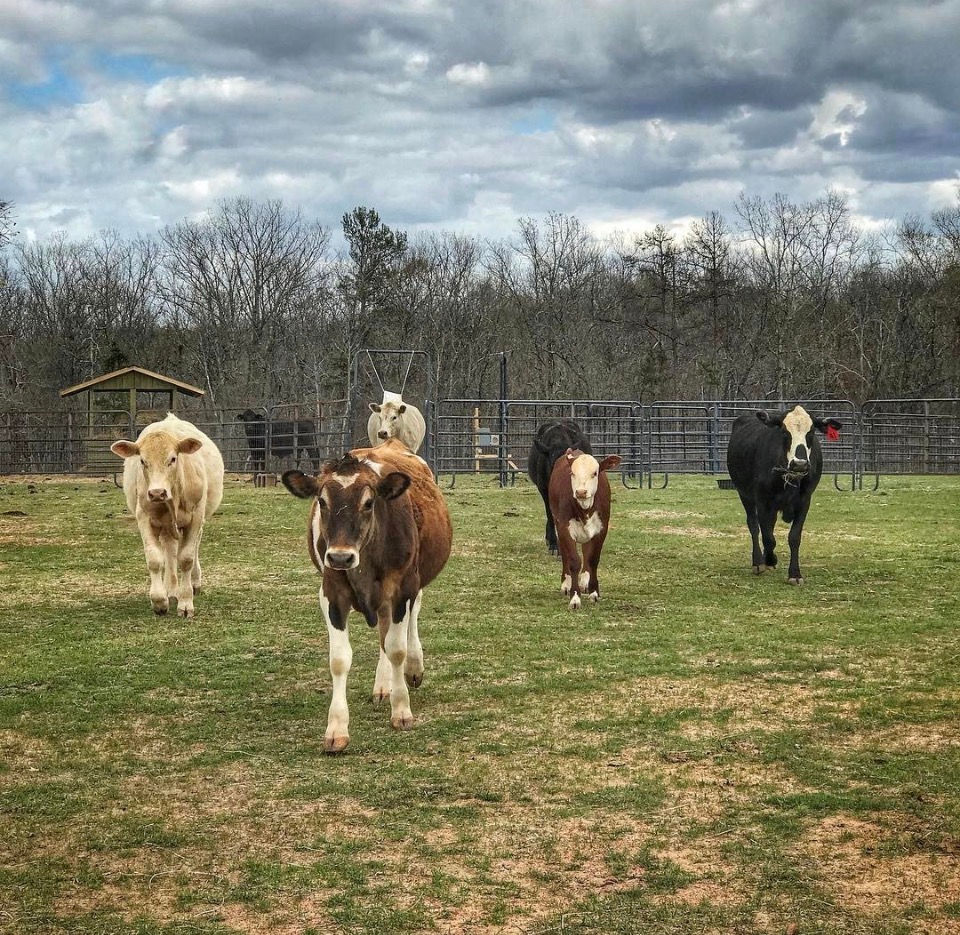

This was Jupiter's family, and their connection to him was unmistakable.
They knew when he left. They knew when he came home. After veterinary trips and hospital stays, the herd celebrated his return, welcoming him back into the familiar life they shared.
And when Jupiter's mobility became more difficult, they stayed close.
His world grew physically smaller toward the end, but the family around him did not. The same herd that had shared his life remained beside him through its final chapter. Especially Venus.
Months of Trying
Jupiter had a history of chronic ulcers on the soles of both rear feet. Managing those problems was particularly challenging for a cow of Jupiter's size, whose body placed tremendous demands on his feet and joints. Earlier this year, those challenges became increasingly difficult to manage.
In June, a new and serious problem developed. Jupiter suddenly became lame on his left front leg and began holding the foot off the ground.
At Auburn University Veterinary Hospital, radiographs revealed chronic pedal osteitis—inflammation involving the bone within the hoof—as well as osteoarthritis. The problems in his rear feet had altered the way Jupiter carried his 2,400-pound body, placing additional strain on his front limbs.
His rear sole ulcers still had not healed.
The veterinary team treated Jupiter with antibiotics and anti-inflammatory medication while continuing intensive hoof care, including trimming and therapeutic shoeing.
Together, they created custom shoes for Jupiter.
Blocks were placed on the medial toes of his rear feet to redistribute his weight. Custom glue-on shoes were then formed for the lateral toes so the areas containing the ulcers could remain open and free from direct pressure.
It was an innovative attempt to give Jupiter's feet the opportunity to heal while supporting his large body.
After a lengthy hospitalization, Jupiter came home. And the herd welcomed him back.
When Growing Old Was Never Part of the Design
There is another part of Jupiter's story that is important to understand.
Like so many animals bred for agriculture, Jupiter's body was shaped by generations of selective breeding around what humans wanted that body to produce. Farmed animals have been bred for traits such as rapid growth, body size, milk or egg production, and reproduction—not necessarily for bodies that can comfortably carry them through a long life.
Sanctuary changes the trajectory of that life, but it cannot undo what has already been written into the body.
When residents who were bred for agriculture are given the opportunity to grow old, they can encounter physical challenges associated with bodies selected for production rather than longevity.
They are living years they were never expected to have, in bodies that were never designed to carry them through old age.
Jupiter lived inside that contradiction.
But there is another contradiction, too.
In agriculture, an animal's care exists within an economic system. Decisions about treatment are inevitably connected to the purpose that animal serves and whether continued investment makes economic sense.
Sanctuary begins from an entirely different premise.
Jupiter did not have to produce anything to make his life worth investing in. His value was not measured by what could be taken from his body, what he could provide in return, or whether the cost of his care could be justified by an eventual financial return.
He simply had to be Jupiter.
That is why, when his medical needs became increasingly complex, the question was never whether Jupiter was becoming too expensive to care for. The questions were: Was he still enjoying his life? Could he be comfortable? Was there a meaningful path forward? Could veterinary medicine still offer him something that would improve his quality of life?
As long as the answer was yes, we pursued that path.
That is why Jupiter went to Auburn. It is why veterinarians, surgeons, and a specialty farrier continued looking for solutions. It is why custom shoes were made specifically for his feet and why his care continued while there were still reasonable options available to him.
Cost is a reality of providing lifelong care, and responsible sanctuary requires planning for it. But it does not determine when a resident has received enough care.
The resident does.
Eventually, Jupiter's body gave us that answer.
We did everything we reasonably could for him, and his veterinary team did everything they could for him. When there was no longer a path that could give Jupiter the comfort and quality of life he deserved, continuing to ask more of his body would no longer have been an act of care.
Watching Jupiter
The plan was for Jupiter to return to Auburn for another evaluation, or sooner if his mobility began to decline.
By early August, we had placed him on quality-of-life watch.
From that point forward, caring for Jupiter required close observation.
Where was he in the pasture? How far was he moving? Was he getting up? How was he standing? Was he eating normally? Did he drink? How pronounced was his lameness? Had something changed since the last check?
Those observations became part of Jupiter's daily care record, allowing the care team and leadership to track changes in his mobility, behavior, and comfort as we continually evaluated what his body was telling us.
We continued hoping we could get him back to Auburn. But transporting a cow Jupiter's size requires him to be able and willing to move safely through the corral and into the trailer.
As his mobility became less reliable, even getting him to the hospital became increasingly difficult.
Through it all, the herd remained part of Jupiter's world. As he moved less, they stayed near him.
And throughout those weeks of monitoring, one question mattered more than any treatment plan or veterinary appointment:
Was Jupiter still comfortable enough to enjoy being Jupiter?
When the Answer Changed
By the end of August, Jupiter was telling us clearly that things had changed.
He was barely putting weight on his right rear leg, which had long been his most problematic. His mobility had deteriorated significantly. It was clear that despite everything being done to support him, Jupiter was no longer comfortable.
His pain medications were increased, and food and water were brought to wherever he was most comfortable. He was checked consistently throughout the day while we remained in communication with his treating veterinarians at Auburn and worked to arrange for our local veterinarian to come to Full Circle to help Jupiter transition peacefully and free him from further discomfort.
After months of treatment, adaptation, consultation, and close monitoring, we knew it was time to let Jupiter go.
The purpose of everything we had done for him was never simply to keep him alive. It was to give him a life he could comfortably participate in.
His body had reached its limit.
A Beautiful Day for Jupiter
On Monday, our local veterinarian came to Full Circle so Jupiter could remain in the place he knew, surrounded by the individuals he knew.
It was a beautiful, clear summer day, and Jupiter spent his final hours grazing in the pasture he knew as home.
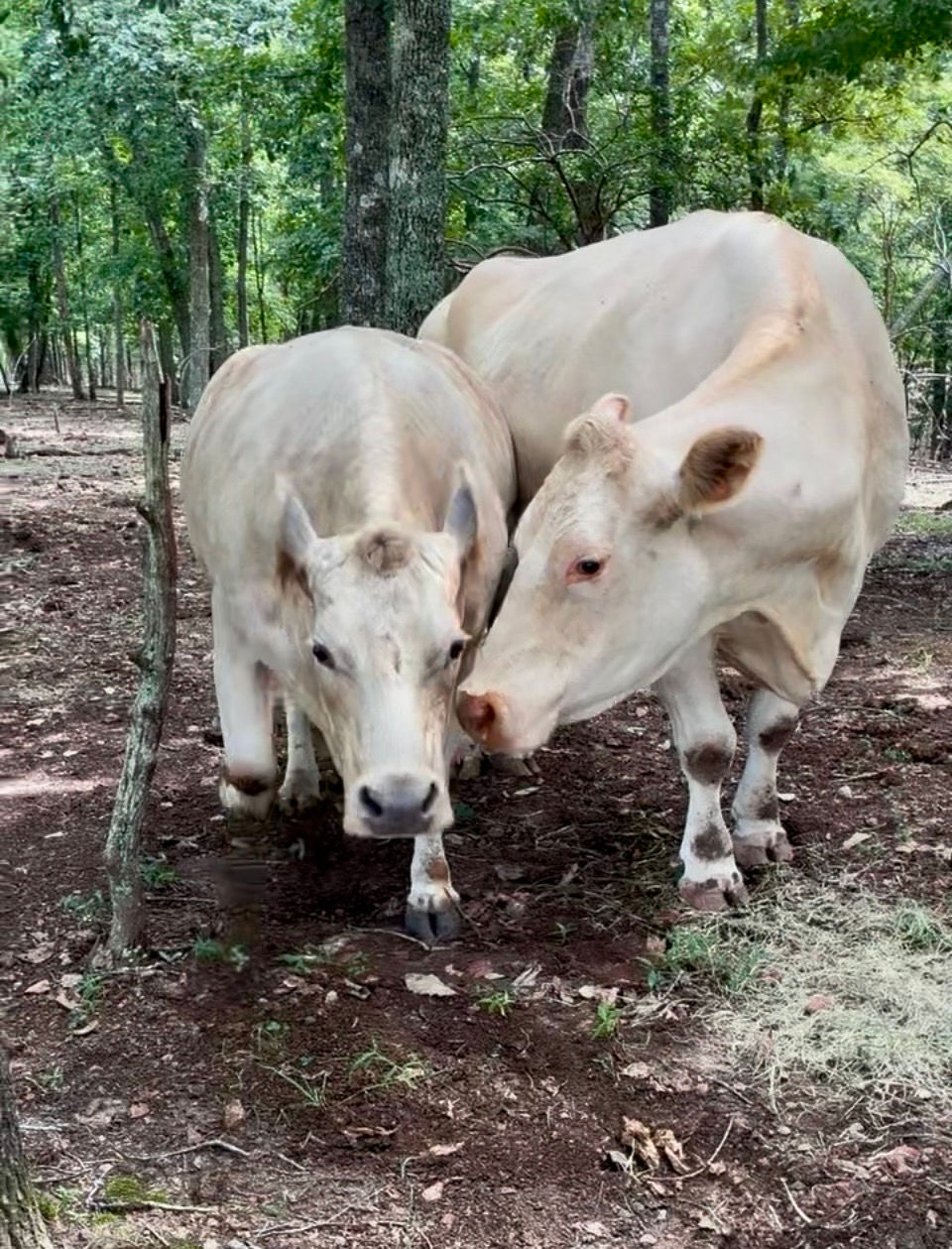
The herd stayed nearby. Ingrid came over to give Jupiter kisses. Gloria, the herd matriarch, watched closely before coming over to be near him, while Kelsey remained close by.
Jupiter was surrounded by the family who had shared his life and the people who loved him. We stayed with him every step of the way, making sure he knew he was loved and spending his final moments upholding our promise made to every resident who comes to Full Circle: that they will be cared for with dignity and compassion through every chapter of their life, including the last.
As we said goodbye, and expressed our love, we told Jupiter to say hello to Sylvia and Matthew.
Then, beneath the summer sky and surrounded by his family, Jupiter passed peacefully. He was in the 22-acre pasture where he had spent most of his life, near the pond he frequently waded into and enjoyed.
For a resident whose final months had required so much monitoring, treatment, transportation, and intervention, we are profoundly grateful that his passing could happen quietly at home. There was no more travel, no more treatment, and nothing more being asked of Jupiter's tired body.
There was stillness. There was peace.
He was home. His herd was near him. He was surrounded by love and familiarity.
And he was no longer hurting.
Their Goodbye
Our relationship with Jupiter was not the only one that mattered. In many ways, it came second.
Jupiter's most constant relationships were with the herd—the individuals who shared his days, his home, and nearly his entire life.
Throughout Jupiter's life the herd ate together, slept together, grazed together, played together, and rested together. They groomed one another, protected one another, communicated in ways that required no words, and offered companionship and support through the rhythms of everyday life.
And Jupiter was a friend to everyone in the herd and to us.
People often marveled at Jupiter's size. We marveled at his heart. At his joyful, mischievous, playful personality and his easygoing nature. At the way he welcomed affection and returned it with extraordinary gentleness.
Jupiter possessed extraordinary physical strength, but there was never anything forceful about the way he moved through his relationships. He was patient, trusting, affectionate, and remarkably gentle—with the herd and with the humans who cared for him.
His relationships spanned nearly his entire life. Venus and Jupiter had known each other before Full Circle. Sylvia had helped raise him once he arrived. Other members of the herd had spent years beside him, sharing the countless ordinary days that make up a life together.
They noticed when Jupiter was gone. They celebrated when he returned. And as his mobility declined, they stayed near him. Especially Venus.
These were not simply animals who shared a pasture. They were Jupiter's family.
So after Jupiter passed away, the herd was given time with him in the pasture without humans standing over them or directing what happened next.
They could approach him if they chose. They could keep their distance. They could experience what had happened in their own way.
They deserved that time.
Only afterward was Jupiter transported for full-body cremation.
Jupiter never belonged to us. He belonged to the herd.
And the herd had the opportunity to say goodbye.
The Jupiter We Knew
Jupiter's medical needs occupied so much of our attention during the final months of his life that it would be easy for those challenges to become the story people remember.
They shouldn't be.
Jupiter was the little cow who arrived with Venus.
He was the youngster Venus and Sylvia helped raise.
And he was Jupe—joyful, curious, playful, and just mischievous enough to keep everyone on their toes.
Jupe once earned the unofficial title of “Lead Fence Inspector” because he had an uncanny ability to show us exactly where a fence needed reinforcement. He wasn't trying to escape. Jupiter simply knew there was good grass and interesting plants on the other side, and if he discovered a weak spot between himself and something worth eating, he was going to investigate.

To be fair to Jupe, this was not a common occurance. For an individual with his size and extraordinary strength, he could have caused plenty of chaos over the years if he had wanted to. He never did. Jupiter got his snacks and remained his usual easygoing self, while we got a very clear indication of where the fence needed reinforcement.
His playful side showed up in other ways, too. Jupiter would sometimes stand with his front legs inside the old hay feeders and stretch his body out in a pose that looked remarkably like cow yoga.

These were the moments that made Jupiter, Jupiter.
People often noticed his size first. But those who spent time with him knew the playful personality inside that large body—the curiosity, the mischief, the gentleness, and the joy he found in simply moving through his world.
He was Jupe.
And for all the attention his medical needs required toward the end, the overwhelming majority of Jupiter's life was made up of ordinary days.
Days of grazing. Days spent with familiar companions. Days of mischief, play, and finding his own ways to make us smile. Days when no one needed to evaluate how he was standing or document how many steps he had taken. Days when Jupiter simply moved through his world on his own terms.
Those are the days sanctuary is ultimately here to provide.
Jupiter lived longer than veterinarians once expected, and we are grateful for every bit of that time.
But sanctuary isn't about pursuing more days at any cost. It is about giving residents the care they deserve for as long as their bodies allow—and recognizing when those bodies have reached their limits.
We would have welcomed more time with Jupe, but never at the expense of his comfort. When his body told us it was time, we listened.
Thank you to everyone who followed Jupiter's journey, supported his care, asked about him, celebrated the encouraging updates, worried through the difficult ones, and loved Jupiter from wherever you were.
Jupiter held a place in the hearts of so many. His place in the Full Circle family will always remain.